<?xml version="1.0" encoding="windows-1252"?><feed version="0.3" xmlns:wfw="http://wellformedweb.org/CommentAPI/" xmlns:slash="http://purl.org/rss/1.0/modules/slash/" xmlns:trackback="http://madskills.com/public/xml/rss/module/trackback/" xmlns="http://purl.org/atom/ns#" xml:lang="it-it">
	<title>Turismo Associati</title>
	<link rel="alternate" type="text/html" href="http://www.turismoassociati.it/dblog/" />
	<tagline type="text/html">Turismo Associati</tagline>
	<id>http://www.turismoassociati.it/dblog/</id>
	<generator url="http://www.turismoassociati.it/dblog/feedatom.asp" version="Turismo Associati">Turismo Associati 2.0</generator>
	<author>
		<name>Turismo Associati</name>
		<url>http://www.turismoassociati.it/dblog/</url>
	</author>
	<modified>2012-05-19T14:05:00+01:00</modified>
	<entry>
		<title><![CDATA[Organizatia Mondiala a Sanatatii a anuntat ca studiul asupra crearii uneia din cele mai periculoase boli din istorie, o tulpina extrem de contagioasa a gripei aviare, trebuie publicata în forma sa necenzurata.]]></title>
		<id>http://www.turismoassociati.it/dblog/articolo.asp?articolo=2688</id>
		<created>2012-05-19T11:09:55+01:00</created>
		<content type="text/html" mode="escaped"><![CDATA[<p><font color="#800080"><strong>Decizia a fost anuntata dupa doua luni de dezbateri intense, dupa ce oficialii SUA au solicitat ca anumite aspecte ale cercetarii sa nu fie publicate, datorita riscului ca acestea sa fie folosite de teroristi. Conform declaratiilor expertilor, boala creata în laborator are potentialul de a ucide miliarde de oameni. Cu toate acestea, creatorul acesteia, dr. Ron Fouchier, a cerut ca studiul sa fie publicat necenzurat, pentru ca va ajuta la prevenirea si la tratarea acestor tulpini gripale în cazul în care acestea vor aparea în urmatorii ani.</strong></font></p>
<p align="center"><img alt="Decizie finală: „reţeta” super-virusului gripal va fi publicată necenzurată" src="http://storage0.dms.mpinteractiv.ro/media/401/321/5109/9246509/1/gripa-aviara.jpg?width=640" width="426" height="274" /></p>
<p>Specialistii OMS sustin publicarea cercetarii, decizia fiind anuntata în urma discutiilor purtate de 22 de experti din întreaga lume. Cei mai multi dintre acestia considera ca riscul utilizarii studiului de catre teroristi este mult mai mic decât riscul ca aceste tulpini sau unele similare sa apara în natura. De aceea, recomandarea lor a fost ca studiul sa fie publicat necenzurat, pentru a permite identificarea si studierea detaliilor care ar putea ajuta la descoperirea virusurilor ce au potentialul sa provoace o pandemie înainte ca acest lucru sa se petreaca.</p>
<p>Forma naturala a gripei aviare a infectat milioane de pasari, mai ales în tarile sarace din Asia. Aceasta nu se transmite usor la oameni, însa atunci când se transmite, are o rata a mortalitatii ridicata. Daca virusul ar dezvolta capacitatea de a infecta oamenii mai usor si pe cea de a se transmite de la om la om, ar putea ucide milioane de persoane.</p>

<p>Din cele 600 de cazuri umane de H5N1 înregistrate pâna acum la nivel mondial, peste 50% au fost letale. Cercetatorii cred ca aceasta este cea mai letala forma a gripei întâlnita pâna acum. Cea mai devastatoare epidemie din istorie, epidemia de gripa din 1918, care a dus la moartea a 50 de milioane de persoane la nivel mondial, a fost provocata de o tulpina cu rata mortalitatii de 2%.</p>
<p>Cercetarea ce a dus la conceperea unei forme extrem de letale a H5N1 s-a dovedit controversata: daca unii cercetatori cer publicarea necenzurata a studiului, altii considera ca nu doar publicarea sa reprezinta o greseala, ci si însasi realizarea sa.</p>
<p>Bruce Alberts, editorul prestigiosului jurnal Science, una din cele doua publicatii stiintifice în care urmeaza sa apara studiul, s-a declarat surprins ca OMS a luat atât de repede decizia publicarii acestuia.</p>
<p>Cercetarea urmeaza sa fie publicata în câteva luni.</p>
<p><strong>Sursa: <a href="http://www.nytimes.com/2012/02/18/health/details-of-bird-flu-research-will-be-released.html">New York Times</a> via <a href="http://www.descopera.ro/dnews/9246509-decizie-finala-reteta-super-virusului-gripal-va-fi-publicata-necenzurata">descopera.ro</a></strong></p>]]></content>
		<link rel="alternate" type="text/html" href="http://www.turismoassociati.it/dblog/articolo.asp?articolo=2688"/>
		<issued>2012-05-19T11:09:55+01:00</issued>
		<modified>2012-05-19T11:09:55+01:00</modified>
		<slash:comments>0</slash:comments>
		<wfw:comments>http://www.turismoassociati.it/dblog/articolo.asp?articolo=2688#commenti</wfw:comments>
	</entry>
	<entry>
		<title><![CDATA[A person's risk of suffering a heart attack increases by approximately 21 times in the first 24 hours after losing a loved one, according to a study lead by researchers at Beth Israel Deaconess Medical Center.]]></title>
		<id>http://www.turismoassociati.it/dblog/articolo.asp?articolo=2559</id>
		<created>2012-05-19T08:01:34+01:00</created>
		<content type="text/html" mode="escaped"><![CDATA[<p><strong><font color="#339966">The study published Jan. 9 online in the journal Circulation found the risk of heart attack remained eight times above normal during the first week after the death of a loved one, slowly declining, but remaining elevated for at least a month.</font></strong></p>
<p>Researchers interviewed approximately 2,000 patients who suffered myocardial infarctions, or heart attacks, over a five-year period. Patients were asked a series of questions about potentially triggering events, including losing someone close to them in the past year.</p>
<p align="center"><img alt="" src="http://www.zeitnews.org/images/stories/storypics/SocialSciences/heart_attack_risk.jpg" width="424" height="267" /></p>
<p>While there is widespread anecdotal evidence that the death of a loved one can lead to declining health in survivors, few studies have looked at the acute effect of bereavement and grief on myocardial infarction.</p>
<p>"Bereavement and grief are associated with increased feelings of depression, anxiety and anger, and those have been shown to be associated with increases in heart rate and blood pressure, and changes in the blood that make it more likely to clot, all of which can lead to a heart attack," says lead author Elizabeth Mostofsky, MPH, ScD, a post-doctoral fellow in the cardiovascular epidemiological unit at BIDMC.</p>

<p>"Some people would say a 'broken heart' related to the grief response is what leads to these physiologic changes," says senior author Murray Mittleman, MD, DrPH, a physician in the Cardiovascular Institute at Beth Israel Deaconess Medical Center, an Associate Professor of Medicine at Harvard Medical School and director of BIDMC's cardiovascular epidemiological research program. "So that emotional sense of the broken heart may actually lead to damage leading to a heart attack and a physical broken heart of a sort."</p>
<p align="center"><iframe height="284" src="http://www.youtube.com/embed/gIXVtkBgm0Y" frameborder="0" width="500" allowfullscreen=""></iframe></p>
<p>Mostofsky and Mittleman think that being aware of the heightened risk can go a long way toward "breaking the link between the loss of someone close and the heart attack."</p>
<p>"Physicians, patients and families should to be aware of this risk and make sure that someone experiencing grief is getting their physical and medical needs met," says Mittleman. "And if an individual develops symptoms that we're concerned might reflect the beginnings of heart attack, we really need to take it very seriously and make sure that that patient gets appropriate evaluation and care."</p>
<p>Providing appropriate psychological interventions for someone who is grieving is also important. Mostofsky says, "We do think it's plausible that social support during that increased time of vulnerability would help mitigate the risk of heart attack."</p>
<p><strong>Source: <a href="http://www.bidmc.org/News/InMedicine/2012/January/BrokenheartCirculation.aspx">Beth Israel Deaconess Medical Center</a> - via zeitnews.org</strong></p>]]></content>
		<link rel="alternate" type="text/html" href="http://www.turismoassociati.it/dblog/articolo.asp?articolo=2559"/>
		<issued>2012-05-19T08:01:34+01:00</issued>
		<modified>2012-05-19T08:01:34+01:00</modified>
		<slash:comments>0</slash:comments>
		<wfw:comments>http://www.turismoassociati.it/dblog/articolo.asp?articolo=2559#commenti</wfw:comments>
	</entry>
	<entry>
		<title><![CDATA[Cured: A Cannabis Story (A Film By David Triplett) VIDEO - A Judge&#8217;s Plea for Pot, G. L. Reichbach]]></title>
		<id>http://www.turismoassociati.it/dblog/articolo.asp?articolo=2703</id>
		<created>2012-05-18T16:07:08+01:00</created>
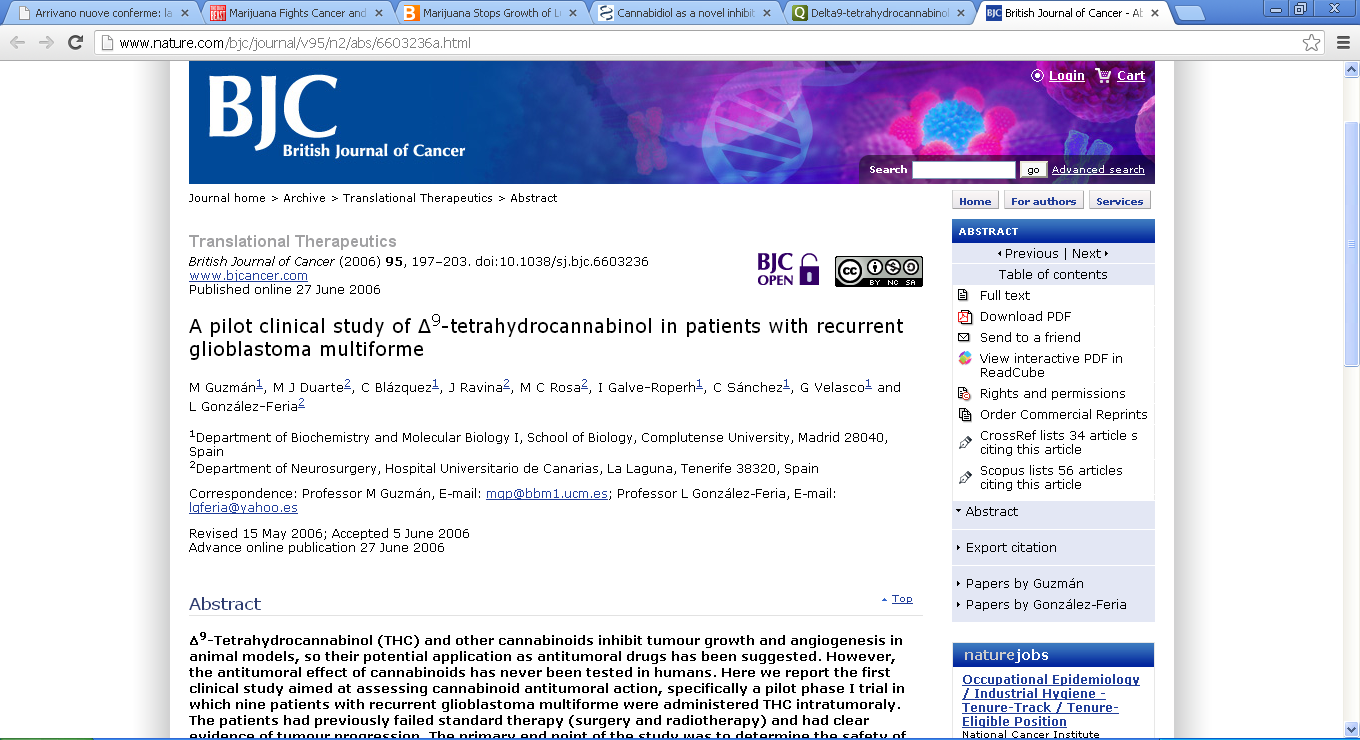
		<content type="text/html" mode="escaped"><![CDATA[<p><strong><font color="#ff0000">Cannabis cured my skin cancer. This is my story. It has been proven that concentrated cannabis oil cures cancer.</font></strong></p>
<p align="center"><img alt="" src="/public/marijuana-animated-leaf.gif" /></p>
<p align="center"> <iframe height="347" src="http://dotsub.com/media/fc4e051a-1709-4e63-8a2c-912b09486c9f/e/m" frameborder="0" width="500"></iframe></p>
<p>Duration: 9 minutes and 15 seconds<br />Country: United States<br />Language: English<br />License: CC - Attribution Non-commercial No Derivatives<br />Genre: Documentary<br />Producer: D. Triplett<br />Director: D. Triplett<br />Views: 1.087.202 (1.012.502 embedded)<br />Posted by: fabulousbb on 30.04.2011</p>
<p><strong>Source: <a href="http://dotsub.com/view/fc4e051a-1709-4e63-8a2c-912b09486c9f">dotsub.com</a></strong></p>
<p><strong><hr /></strong></p>
<p><strong><font color="#ff0000">THREE and a half years ago, on my 62nd birthday, doctors discovered a mass on my pancreas. It turned out to be Stage 3 pancreatic cancer. I was told I would be dead in four to six months. Today I am in that rare coterie of people who have survived this long with the disease. But I did not foresee that after having dedicated myself for 40 years to a life of the law, including more than two decades as a New York State judge, my quest for ameliorative and palliative care would lead me to marijuana.</font></strong></p>
<p align="center"><img alt="" src="http://graphics8.nytimes.com/images/2012/05/17/opinion/0517OPEDhammerstad/0517OPEDhammerstad-articleInline.jpg" /></p>
<p>My survival has demanded an enormous price, including months of chemotherapy, radiation hell and brutal surgery. For about a year, my cancer disappeared, only to return. About a month ago, I started a new and even more debilitating course of treatment. Every other week, after receiving an IV booster of chemotherapy drugs that takes three hours, I wear a pump that slowly injects more of the drugs over the next 48 hours.</p>
<p>Nausea and pain are constant companions. One struggles to eat enough to stave off the dramatic weight loss that is part of this disease. Eating, one of the great pleasures of life, has now become a daily battle, with each forkful a small victory. Every drug prescribed to treat one problem leads to one or two more drugs to offset its side effects. Pain medication leads to loss of appetite and constipation. Anti-nausea medication raises glucose levels, a serious problem for me with my pancreas so compromised. Sleep, which might bring respite from the miseries of the day, becomes increasingly elusive.</p>
<p>Inhaled marijuana is the only medicine that gives me some relief from nausea, stimulates my appetite, and makes it easier to fall asleep. The oral synthetic substitute, Marinol, prescribed by my doctors, was useless. Rather than watch the agony of my suffering, friends have chosen, at some personal risk, to provide the substance. I find a few puffs of marijuana before dinner gives me ammunition in the battle to eat. A few more puffs at bedtime permits desperately needed sleep.</p>

<p>This is not a law-and-order issue; it is a medical and a human rights issue. Being treated at Memorial Sloan Kettering Cancer Center, I am receiving the absolute gold standard of medical care. But doctors cannot be expected to do what the law prohibits, even when they know it is in the best interests of their patients. When palliative care is understood as a fundamental human and medical right, marijuana for medical use should be beyond controversy.</p>
<p>Sixteen states already permit the legitimate clinical use of marijuana, including our neighbor New Jersey, and Connecticut is on the cusp of becoming No. 17. The New York State Legislature is now debating a bill to recognize marijuana as an effective and legitimate medicinal substance and establish a lawful framework for its use. The Assembly has passed such bills before, but they went nowhere in the State Senate. This year I hope that the outcome will be different. Cancer is a nonpartisan disease, so ubiquitous that it&#8217;s impossible to imagine that there are legislators whose families have not also been touched by this scourge. It is to help all who have been affected by cancer, and those who will come after, that I now speak.</p>
<p>Given my position as a sitting judge still hearing cases, well-meaning friends question the wisdom of my coming out on this issue. But I recognize that fellow cancer sufferers may be unable, for a host of reasons, to give voice to our plight. It is another heartbreaking aporia in the world of cancer that the one drug that gives relief without deleterious side effects remains classified as a narcotic with no medicinal value.</p>
<p>Because criminalizing an effective medical technique affects the fair administration of justice, I feel obliged to speak out as both a judge and a cancer patient suffering with a fatal disease. I implore the governor and the Legislature of New York, always considered a leader among states, to join the forward and humane thinking of 16 other states and pass the medical marijuana bill this year. Medical science has not yet found a cure, but it is barbaric to deny us access to one substance that has proved to ameliorate our suffering.</p>
<p><strong><font color="#800080"><a href="http://www.nycourtsystem.com/applications/judicialdirectory/Bio.php?ID=7023088">Gustin L. Reichbach</a> is a justice of the State Supreme Court in Brooklyn. </font></strong></p>
<p><strong><font color="#ff0000">A version of this op-ed appeared in print on May 17, 2012, on page A27 of the New York edition with the headline: A Judge&#8217;s Plea for Pot.</font></strong></p>
<p><strong>Source: <a href="http://www.nytimes.com/2012/05/17/opinion/a-judges-plea-for-medical-marijuana.html?_r=1">NYtimes.com</a></strong></p>]]></content>
		<link rel="alternate" type="text/html" href="http://www.turismoassociati.it/dblog/articolo.asp?articolo=2703"/>
		<issued>2012-05-18T16:07:08+01:00</issued>
		<modified>2012-05-18T16:07:08+01:00</modified>
		<slash:comments>0</slash:comments>
		<wfw:comments>http://www.turismoassociati.it/dblog/articolo.asp?articolo=2703#commenti</wfw:comments>
	</entry>
	<entry>
		<title><![CDATA[Mandarli tutti a casa (editoriale Marco Travaglio Servizio Pubblico 17 maggio 2012 La Politica) VIDEO.]]></title>
		<id>http://www.turismoassociati.it/dblog/articolo.asp?articolo=2702</id>
		<created>2012-05-18T15:16:09+01:00</created>
		<content type="text/html" mode="escaped"><![CDATA[<p><strong><font color="#800080"><img alt="" src="/public/exclusive-Turismo-Associati-it-350x.png" /></font></strong></p>
<p><strong><font color="#800080">Servizio Pubblico 24a puntata - titolo La Politica. In questo video l'editoriale di Marco Travaglio "Non si capisce bene se i politici fanno cos&igrave; perch&eacute; non vogliono cambiare, o non possono cambiare o non vogliono cambiare, ma mi sembrano tre ottimi motivi per mandarli tutti a casa lo stesso".</font></strong></p>
<p align="center"><iframe height="284" src="http://www.youtube.com/embed/eWz-fcHrOtc" frameborder="0" width="500" allowfullscreen=""></iframe></p>

<p align="left"><strong>Marco Travaglio</strong> (Torino, 13 ottobre 1964) &egrave; un giornalista, saggista e scrittore italiano, attualmente vicedirettore de il Fatto Quotidiano.</p>
<p align="left">Le sue principali aree di interesse sono la cronaca giudiziaria e l'attualit&agrave; politica, occupandosi di questioni che spaziano dalla lotta alla mafia ai fenomeni di corruzione. Pi&ugrave; di una volta i suoi articoli hanno suscitato le ire dei politici, senza distinzione di schieramenti.</p>
<p align="center"><img alt="" src="/public/Passaparola-Turismo-Associati-Marco-Travaglio-Beppe-Grillo.PNG" /></p>
<p><strong>Fonte: </strong><a href="http://tv.ilfattoquotidiano.it"><strong>http://tv.ilfattoquotidiano.it</strong></a></p>]]></content>
		<link rel="alternate" type="text/html" href="http://www.turismoassociati.it/dblog/articolo.asp?articolo=2702"/>
		<issued>2012-05-18T15:16:09+01:00</issued>
		<modified>2012-05-18T15:16:09+01:00</modified>
		<slash:comments>0</slash:comments>
		<wfw:comments>http://www.turismoassociati.it/dblog/articolo.asp?articolo=2702#commenti</wfw:comments>
	</entry>
	<entry>
		<title><![CDATA[100 anni fa il mondo scopre che l'esploratore Amundsen ha conquistato il Polo Sud. Ma il primo a saperlo č un dipendente dell’ufficio telegrafi della Tasmania]]></title>
		<id>http://www.turismoassociati.it/dblog/articolo.asp?articolo=2670</id>
		<created>2012-05-18T14:09:12+01:00</created>
		<content type="text/html" mode="escaped"><![CDATA[<p><strong><font color="#993366">Far sapere al mondo che l&igrave;, in quel momento, si stava compiendo un’impresa epocale, non era cos&igrave; semplice. Agli inizi del Novecento le comunicazioni in quella parte di mondo, nel profondo Sud del pianeta, erano piuttosto problematiche. Cos&igrave;, anche le scoperte degne di nota e traguardi importanti come la conquista del Polo Sud arrivavano in ritardo. Nel caso specifico, quasi tre mesi dopo che la spedizione al seguito di  Roald Amundsen(1872-1928)ebbe piantato la bandiera norvegese al centro dell’ Antartide. </font></strong></p>
<p align="center"><img src="http://upload.wikimedia.org/wikipedia/commons/thumb/7/7d/Nlc_amundsen.jpg/220px-Nlc_amundsen.jpg" alt="" /></p>
<p>Era infatti il 7 marzo 1912 quando lo storico telegramma con l’annuncio della conquista veniva spedito da Hobart, in Tasmania, ma il fatto risaliva al 14 dicembre dell’anno precedente. Anche se l’impresa era grande, Amundsen non fece molto rumore quando mise piede a terra dalla sua Fram, l’imbarcazione che lo aveva portato fin l&igrave;. Si racconta infatti che prima di diffondere la notizia, l’esploratore volesse assicurarsi che il re della Norvegia Haakon VII venisse a conoscenza della sua prodezza. E fu cos&igrave; che l’impresa rest&ograve; in gran segreto, almeno all’inizio. Nello stesso modo in cui era cominciata, visto che Amundsen non rese note le sue mire fino all’ultimo (aveva sperimentato in prima persona cosa volesse dire essere battuto sul tempo nella conquista al Polo Nord, da parte di Frederik Cook e Robert Peary, e non voleva farsi superare di nuovo). </p>
<p>Quel telegramma fu la prova che ce l’aveva fatta, in pieno. Da una parte, infatti, con quelle poche righe Amundsen reclamava il primato di aver conquistato per il primo il Polo Sud; dall’altro questo significava che i suoi diretti concorrenti, quelli della spedizione inglese Terra Nova al seguito di Robert Falcon Scott, avevano mancato l’impresa. Questi infatti avrebbero tagliato il traguardo solo una trentina di giorni dopo il norvegese, e avrebbero avuto un destino decisamente pi&ugrave; infausto, visto che i membri della missione esplorativa e il suo capitano sarebbero morti tutti sulla via del ritorno, sconfitti dalla fame, dalla stanchezza e dal freddo. </p>

<p>Amundsen avrebbe spiegato cos&igrave; il modo in cui era riuscito dove altri avevano fallito: “Posso dire che questo &egrave; il fattore pi&ugrave; importante, il modo in cui la spedizione &egrave; stata equipaggiata, il modo in cui ogni difficolt&agrave; &egrave; stata prevista, e le precauzioni per affrontarla o evitarla. La vittoria aspetta colui che ha tutto in ordine, la fortuna, come la chiamano alcuni. La sconfitta &egrave; certa per colui che non ha tenuto conto di tutte le necessarie precauzioni per tempo; questa si chiama sfortuna”.  </p>
<p>Ed eccola la fortuna di Amundsen. In primo luogo era stata una questione di determinazione. Aveva in testa il ghiaccio e il freddo sin da bambino, sin da quando dormiva con la finestra aperta per temprare il corpo e lo spirito alle condizioni estreme. E amava le grandi imprese (nel 1906 diventava infatti il primo ad aver attraversato il Passaggio a Nordovest).</p>
<p>Cos&igrave;, nel 1910, dopo aver fatto credere di essere diretto verso lo Stretto di Bering, attraverso cui sarebbe entrato nel Mar Artico risalendo il Pacifico una volta passato Capo Horn, devi&ograve; e si mise in corsa per il Polo Sud. Obiettivo: la Baia delle Balene, nell’Antartide, da dove si sarebbe diretto verso l’interno. Stabilita la meta, il successo sarebbe stato una combinazione di tenacia e abilit&agrave; tecniche, tra cui la dimestichezza con gli sci e con le slitte trainate dai cani. Anche grazie a loro, ai quattro compagni di viaggio, e forse anche alla fortuna vera e propria, il 14 dicembre 1911 Amundsen conquistava il Polo Sud.</p>
<p><strong>Fonte: wired.it</strong></p>]]></content>
		<link rel="alternate" type="text/html" href="http://www.turismoassociati.it/dblog/articolo.asp?articolo=2670"/>
		<issued>2012-05-18T14:09:12+01:00</issued>
		<modified>2012-05-18T14:09:12+01:00</modified>
		<slash:comments>0</slash:comments>
		<wfw:comments>http://www.turismoassociati.it/dblog/articolo.asp?articolo=2670#commenti</wfw:comments>
	</entry>
	<entry>
		<title><![CDATA[În ultimul timp, oamenii de stiinta ne sfatuiesc sa facem miscare pentru a ne mentine în forma, ca o componenta a unui stil de viata sanatos. Dar oare câta miscare ar trebui sa facem?]]></title>
		<id>http://www.turismoassociati.it/dblog/articolo.asp?articolo=2687</id>
		<created>2012-05-18T11:04:11+01:00</created>
		<content type="text/html" mode="escaped"><![CDATA[<p align="center"><strong><font color="#993366"><img alt="Science says it's okay to barely exercise at all" src="http://dvice.com/assets_c/2012/02/lazy_polar-thumb-550xauto-83910.jpg" width="438" height="341" /></font></strong></p>
<p><strong><font color="#993366">Noi cercetari demonstreaza ca, de fapt, avem nevoie sa facem mult mai putina miscare decât am crede. Desigur, cu cât mai multe exercitii fizice, cu atât mai bine, însa <font color="#ff0000">cercetatorii din Canada au efectuat un studiu pentru a vedea care este minimul de exercitii fizice necesara unui om pentru o viata sanatoasa</font>.</font></strong></p>
<p align="center"><img alt="Câtă mişcare trebuie să facem pentru a avea un stil de viaţă sănătos?" src="http://storage0.dms.mpinteractiv.ro/media/401/321/5109/9243779/1/fitness.jpg?width=640" width="384" height="277" /></p>
<p>Studiul a fost realizat pe doua grupuri de voluntari: unul alcatuit din persoane cu vârste medii si o conditie fizica deficitara (dar sanatosi) si un alt grup format tot din persoane cu vârste medii, dar care sufereau de boli cardiovasculare. Pentru început, specialistii au calculat, pentru fiecare individ, nivelul de baza al rezistentei la efort.</p>
<p>Pentru exercitiile de rutina, specialistii au propus ca voluntarii sa faca exercitii pe biciclete medicinale, de 2 ori pe saptamâna. Timp de un minut, ei au pedalat cu 90% din maximul de efort (care se masoara luând ca baza frecventa batailor inimii, pâna la 220 pe minut, minus vârsta individului), urmat de un minut de pedalare usoara. Acest proces trebuia repetat de 10 ori, astfel încât individul sa efectueze un total de 20 de minute de exercitii.</p>

<p>Dupa doar câteva saptamâni, toti voluntarii au prezentat o îmbunatatire a sanatatii. Aceasta schimbare s-a observat mai ales în cazul celor care sufereau de boli cardiace. Corpurile lor au produs mai multe proteine, implicate în productia de energie si de oxigen . De asemenea, s-au observat o scadere a riscului de diabet tip 2, datorata îmbunatatirii nivelului de sensibilitatea la insulina si a capacitatii sângelui de a retine zahar.</p>
<p>Studiul vine sa demonstreze ca nu este nevoie sa mergem zilnic la sala, atât timp cât stim ce fel de exercitii ne-ar face bine. Specialistii subliniaza faptul ca nu e nicio problema daca facem mai multe exercitii, dar ca, pentru unii dintre noi, care nu au destul timp, este bine sa stim ca 40 de minute de miscare, pe saptamâna, sunt de ajuns pentru a ne mentine în forma.</p>
<p><strong>Sursa: <a href="http://dvice.com/archives/2012/02/science-says-it.php">Dvice</a> via descopera.ro</strong></p>]]></content>
		<link rel="alternate" type="text/html" href="http://www.turismoassociati.it/dblog/articolo.asp?articolo=2687"/>
		<issued>2012-05-18T11:04:11+01:00</issued>
		<modified>2012-05-18T11:04:11+01:00</modified>
		<slash:comments>0</slash:comments>
		<wfw:comments>http://www.turismoassociati.it/dblog/articolo.asp?articolo=2687#commenti</wfw:comments>
	</entry>
	<entry>
		<title><![CDATA[Radar system could detect people who fall onto train tracks.]]></title>
		<id>http://www.turismoassociati.it/dblog/articolo.asp?articolo=2558</id>
		<created>2012-05-18T08:08:19+01:00</created>
		<content type="text/html" mode="escaped"><![CDATA[<p><strong><font color="#993366">Although you may never have seen it happen yourself, it isn't all that uncommon for large objects - including people - to fall onto the tracks at subway or railway platforms. While security personnel viewing CCTV feeds will catch some of these accidents, the cameras' shots are sometimes obscured by people, poor lighting, or even the trains themselves. The results can range from lengthy delays in rail service, to fatalities. Now, however, researchers working on a project for the Universit&eacute; Lille Nord de France have developed a system that uses radar to automatically detect and identify objects that fall onto the tracks. When installed at a platform, the system could then shut off power to the tracks, and notify oncoming trains.</font></strong></p>
<p align="center"><img src="http://www.zeitnews.org/images/stories/storypics/Transportation/china_bullet_train.jpg" width="402" height="322" alt="" /></p>

<p>The system continuously sends out wideband radio waves, and analyzes their reflections when they're bounced back by a foreign object, via an Automatic Target Recognition procedure. Only the most prominent features of the object's reflected signal are processed, and then compared to a database of known objects.</p>
<p>In a computer simulation, the researchers tested the system using objects such as suitcases, bottles, and the bodies of human adults, adolescents and children. In all cases, it was able to accurately identify the objects. Physical tests were also conducted in an echo-free chamber, in which the radio waves were guided towards two men, a woman, and two pieces of luggage made of different materials. Once again, it was able to differentiate between the subjects.</p>
<p>"We hope these devices will be used in the near future since they are very complementary to existing video systems and have a similar final cost," said Ali Mrou&eacute;, lead author of a paper on the research. "The complementary use of video and radar systems could lead to low levels of false detection, which is mandatory for this application, and maximize the chance of survival for passengers who have fallen on the line."</p>
<p><strong>Source: <a href="http://www.gizmag.com/radar-train-subway-platforms/21028/">GizMag</a> - via <a href="http://www.zeitnews.org">zeitnews.org</a></strong></p>]]></content>
		<link rel="alternate" type="text/html" href="http://www.turismoassociati.it/dblog/articolo.asp?articolo=2558"/>
		<issued>2012-05-18T08:08:19+01:00</issued>
		<modified>2012-05-18T08:08:19+01:00</modified>
		<slash:comments>0</slash:comments>
		<wfw:comments>http://www.turismoassociati.it/dblog/articolo.asp?articolo=2558#commenti</wfw:comments>
	</entry>
	<entry>
		<title><![CDATA[A superlens would let you see a virus in a drop of blood and open the door to better and cheaper electronics. It might, says Durdu Guney, make ultra-high-resolution microscopes as commonplace as cameras in our cell phones.]]></title>
		<id>http://www.turismoassociati.it/dblog/articolo.asp?articolo=2557</id>
		<created>2012-05-17T14:01:21+01:00</created>
		<content type="text/html" mode="escaped"><![CDATA[<p><strong><font color="#993366">No one has yet made a superlens, also known as a perfect lens, though people are trying. Optical lenses are limited by the nature of light, the so-called diffraction limit, so even the best won't usually let us see objects smaller than 200 nanometers across, about the size of the smallest bacterium. Scanning electron microscopes can capture objects that are much smaller, about a nanometer wide, but they are expensive, heavy, and, at the size of a large desk, not very portable.</font></strong></p>
<p>To build a superlens, you need metamaterials: artificial materials with properties not seen in nature. Scientists are beginning to fabricate metamaterials in their quest to make real seemingly magical phenomena like invisibility cloaks, quantum levitation—and superlenses.</p>
<p>Now Guney, an assistant professor of electrical and computer engineering at Michigan Technological University, has taken a major step toward creating superlens that could use visible light to see objects as small as 100 nanometers across.</p>
<p align="center"><img src="http://www.zeitnews.org/images/stories/storypics/ChemistryPhysics/negative_index_material.jpg" alt="" /></p>
<p align="center"><font color="#ff6600" size="1">This is an illustration of Durdu Guney's theoretical negative-index metamaterial, which would be the heart of a perfect lens. The colors show magnetic fields generated by plasmons. The black arrows show the direction of electrical current in metallic layers, and the numbers indicate current loops that contribute to negative refraction. Credit: Durdu Guney</font></p>
<p>The secret lies in plasmons, charge oscillations near the surface of thin metal films that combine with special nanostructures. When excited by an electromagnetic field, they gather light waves from an object and refract it in a way not seen in nature called negative refraction. This lets the lens overcomes the diffraction limit. And, in the case of Guney's model, it could allow us to see objects smaller than 1/1,000th the width of a human hair.</p>
<p>Other researchers have also been able to sidestep the diffraction limit, but not throughout the entire spectrum of visible light. Guney's model showed how metamaterials might be "stretched" to refract light waves from the infrared all the way past visible light and into the ultraviolet spectrum.</p>

<p>Making these superlenses would be relatively inexpensive, which is why they might find their way into cell phones. But there would be other uses as well, says Guney.</p>
<p>"It could also be applied to lithography," the microfabrication process used in electronics manufacturing. "The lens determines the feature size you can make, and by replacing an old lens with this superlens, you could make smaller features at a lower cost. You could make devices as small as you like."</p>
<p>Computer chips are made using UV lasers, which are expensive and difficult to build. "With this superlens, you could use a red laser, like the pointers everyone uses, and have simple, cheap machines, just by changing the lens."</p>
<p>What excites Guney the most, however, is that a cheap, accessible superlens could open our collective eyes to worlds previously known only to a very few.</p>
<p>"The public's access to high-powered microscopes is negligible," he says. "With superlenses, everybody could be a scientist. People could put their cells on Facebook. It might just inspire society's scientific soul."</p>
<p>Guney and graduate student Muhammad Aslam published an article on their work, "Surface Plasmon Diven Scalable Low-Loss Negative-Index Metamaterial in the visible spectrum," in Physical Review B, volume 84, issue 19.</p>
<p><strong>Source: <a href="http://www.mtu.edu/news/stories/2012/january/story60318.html">Michigan Technological University</a> - via ZeitNews.org</strong></p>]]></content>
		<link rel="alternate" type="text/html" href="http://www.turismoassociati.it/dblog/articolo.asp?articolo=2557"/>
		<issued>2012-05-17T14:01:21+01:00</issued>
		<modified>2012-05-17T14:01:21+01:00</modified>
		<slash:comments>0</slash:comments>
		<wfw:comments>http://www.turismoassociati.it/dblog/articolo.asp?articolo=2557#commenti</wfw:comments>
	</entry>
	<entry>
		<title><![CDATA[Cybercrimine, Milano e Roma tra le piů insicure d’Europa. Ma sul podio ci sono Manchester, Amsterdam e Stoccolma.]]></title>
		<id>http://www.turismoassociati.it/dblog/articolo.asp?articolo=2669</id>
		<created>2012-05-17T11:05:51+01:00</created>
		<content type="text/html" mode="escaped"><![CDATA[<p><font color="#993366"><strong>Milano e Roma sono fra le dieci citt&agrave; europee maggiormente esposte ai rischi legati agli attacchi informatici. Sono rispettivamente settima e ottava in questa classifica guidata da Manchester, Amsterdam e Stoccolma, frutto di una indagine commissionata alla societ&agrave; di ricerca Sperling’s Best Places da Symantec, che ha diffuso oggi i risultati in occasione della presentazione della nuova versione (la sesta) della propria security suite Norton 360. Davanti a Milano e Roma ci sono Parigi, Londra e Dublino, mentre dietro chiudono la top ten Barcellona e Berlino. </strong></font></p>
<p align="center"><img src="http://media.wired.it/uploads/599x337/201210/crimine_informatico__milano_e_roma_fra_le_pi___insicure_d___europa_6883.jpg" width="433" height="242" alt="" /></p>
<p>Sperling ha determinato le classifiche per comportamenti degli utenti, incidenza di pc e smartphone, utilizzo di social network, accesso a hotspot Wi-Fi potenzialmente non sicuri e ha poi comparato tutto con i dati degli attacchi informatici registrati nelle diverse citt&agrave;. L’elevata presenza di hotspot, insieme agli attacchi con malware, ha portato Manchester in cima alla classifica. </p>
<p>Andando a spulciare le singole graduatorie si nota che Roma &egrave; la capitale europea dei bot, con una media di 1.314 computer controllati in remoto da hacker per inviare spam e altri attacchi informatici, contro i 147 di Manchester e i 307 di Milano. Milano che a sua volta &egrave; la prima nella classifica dei tentativi di attacchi via Web (555 in media, circa il doppio della seconda, Amsterdam, e di Roma, quarta) e per indirizzi ip di spammer (3.768) seguita in questo caso proprio da Roma (1.246). Le due citt&agrave; italiane sono inoltre seconda e quarta nella classifica dei tentativi di attacco con malware. </p>

<p>Per quale motivo allora non sono in testa alla classifica delle citt&agrave; pi&ugrave; pericolose? Milano ha ottenuto il massimo punteggio aggregato per i dati sulla criminalit&agrave; informatica, ma ha un basso livello di penetrazione di pc (a Manchester i computer per famiglia sono il doppio), di utilizzo di Internet (49,2%, il pi&ugrave; basso insieme a Roma, dopo Barcellona ferma al 62,2%) e di presenza di hotspot Wi-Fi (34,9 ogni 100 mila persone, peggio solo di Roma ferma a 21,9, ben distante dai 445,4 di Manchester). Allo stesso modo, milanesi e romani sono relativamente meno esposti agli attacchi anche per via della minore presenza nei social network (45,8% della popolazione, mentre le altre citt&agrave; sono sopra il 61%). Non che questi siano di per s&eacute; pericolosi, ma come pc e smartphone rappresentano una porta d’ingresso per le minacce. </p>
<p>Come ci si difende? Le regole sono sempre le solite, spiega Symantec: cautela nell’uso di hotspot wi-fi, pi&ugrave; esposti allo cattura di password e informazioni tramite sniffing, anti-virus e security suite costantemente aggiornate e password complesse e uniche per ogni sito.</p>
<p><strong>Fonte: wired.it</strong></p>]]></content>
		<link rel="alternate" type="text/html" href="http://www.turismoassociati.it/dblog/articolo.asp?articolo=2669"/>
		<issued>2012-05-17T11:05:51+01:00</issued>
		<modified>2012-05-17T11:05:51+01:00</modified>
		<slash:comments>0</slash:comments>
		<wfw:comments>http://www.turismoassociati.it/dblog/articolo.asp?articolo=2669#commenti</wfw:comments>
	</entry>
	<entry>
		<title><![CDATA[O echipa internationala de oameni de stiinta a analizat ADN-ul unei alge microscopice primitive, iar rezultatele au fost spectaculoase. ]]></title>
		<id>http://www.turismoassociati.it/dblog/articolo.asp?articolo=2686</id>
		<created>2012-05-17T08:05:30+01:00</created>
		<content type="text/html" mode="escaped"><![CDATA[<p><strong><font color="#808080">Conform datelor, se pare ca toate plantele de pe Terra ar fi avut un singur stramos, din care au evoluat si s-au diversificat toate speciile cunoscute în prezent.</font></strong></p>
<p align="center"><img alt="A fost descoperit strămoşul tuturor plantelor" src="http://storage0.dms.mpinteractiv.ro/media/401/321/5109/9244665/1/glaucocystis.jpg?width=640" width="460" height="298" /></p>
<p>Echipa condusa de bioinformaticianul Dana Price din cadrul Laboratoarelor Bhattacharya de pe lânga Universitatea Rutgers din New Jersey, SUA, a analizat ADN-ul plastidelor algei glaucofite Cyanophora paradoxa, una dintre cele mai primitive alge cunoscute, dupa care a comparat datele cu cele obtinute din analiza plastidelor altor specii de alge (rosii si verzi), precum si ale unor plante terestre.</p>
<p>Rezultatele arata ca, atât la alge, cât si la plantele terestre, plastidele (cloroplastele), organitele celulare în care are loc procesul fotosintezei, ar fi fost, la origine, cianobacterii, organisme primitive unicelulare, fotosintetizatoare, care, în cursul evolutiei, au fost încorporate în celulele altor organisme, rezultând astfel plantele, capabile si ele de fotosinteza.</p>

<p>Analiza ADN-ului algei Cyanophora paradoxa arata ca plastidele (cloroplastele) acesteia amintesc de primele cianobacterii, deoarece includ gene responsabile de procesele de fermentatie si biosinteza amindonului.</p>
<p>Cercetatorii au descoperit, de asemenea, gene similare celor din bacteriile stravechi de tipul Chlamydia.</p>
<p>Toate aceste gene au fost responsabile de fotosinteza si de transformarea substantelor astfel obtinute în polizaharide, ce puteau fi depozitate în celula.</p>
<p>Alte analize genetice sugereaza ca incorporarea cianobacteriilor s-ar fi întâmplat într-o singura ocazie si a necesitat coopoerarea dintre celulele-gazda, cianobacteria fotosintetizatoare si organismul tip Chlamydia.</p>
<p>Cianobacteriile produceau hrana din lumina solara, iar celelalte bacterii transformau substantele fotosintetizate, astfel încât sa poata fi accesibile celulei-gazda.</p>
<p>Conform acelorasi specialisti, cele trei componente au format un organism nou. În urma cu peste 60 milioane ani o specie de amoeba, denumita Paulinella, a încorporat de asemenea o cyianobacterie fotosintetizanta.</p>
<p><strong>Sursa: <a href="http://www.physorg.com/print248680764.html">Physorg</a> &amp; descopera.ro</strong></p>]]></content>
		<link rel="alternate" type="text/html" href="http://www.turismoassociati.it/dblog/articolo.asp?articolo=2686"/>
		<issued>2012-05-17T08:05:30+01:00</issued>
		<modified>2012-05-17T08:05:30+01:00</modified>
		<slash:comments>0</slash:comments>
		<wfw:comments>http://www.turismoassociati.it/dblog/articolo.asp?articolo=2686#commenti</wfw:comments>
	</entry>
	<entry>
		<title><![CDATA[Journal of the American Medical Association, study: No lung danger from casual pot (marijuana, cannabis indica) smoking!]]></title>
		<id>http://www.turismoassociati.it/dblog/articolo.asp?articolo=2701</id>
		<created>2012-05-16T15:00:08+01:00</created>
		<content type="text/html" mode="escaped"><![CDATA[<p><font color="#ff0000"><strong><img src="/public/exclusive-Turismo-Associati-it-350x.png" alt="" /></strong></font></p>
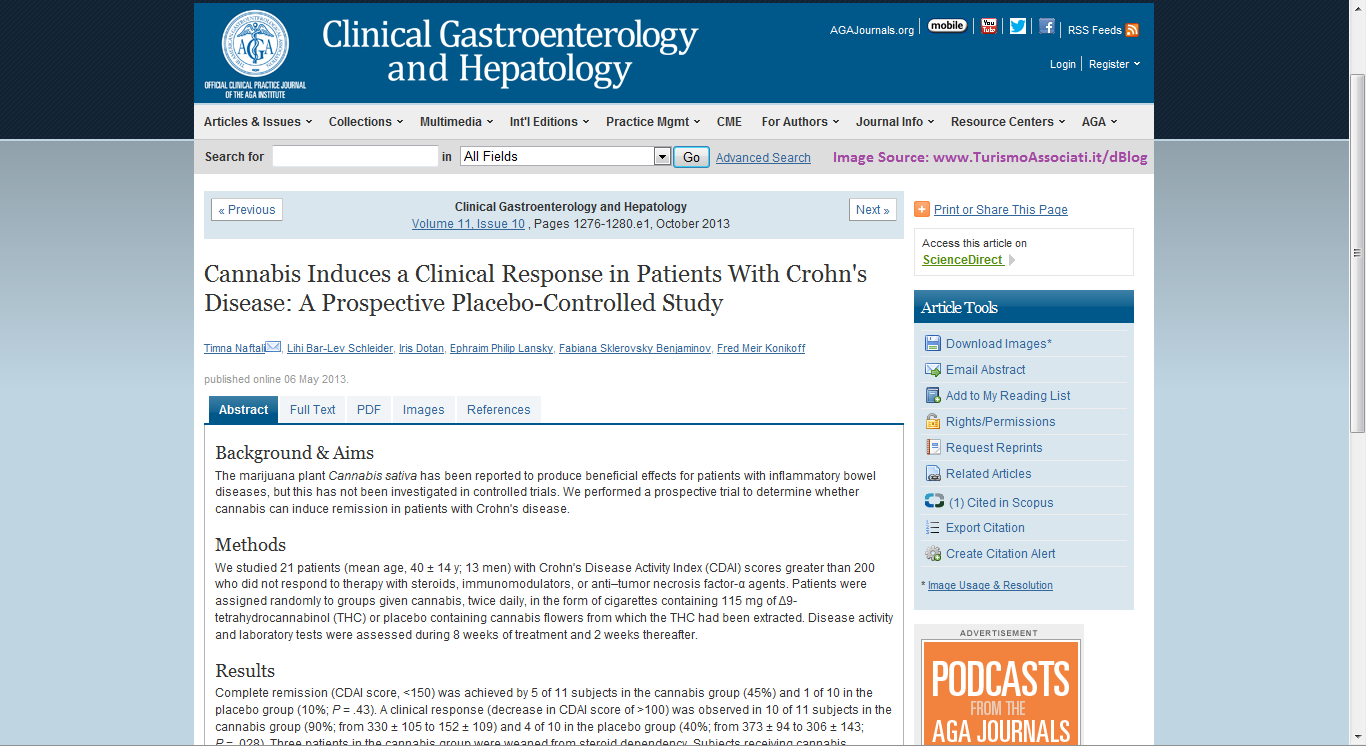
<p><font color="#ff0000"><strong>Add one more data point to the decades-old debate over marijuana legalization: A new study concludes that casual pot smoking - up to one joint per day - does not affect the functioning of your lungs.</strong></font></p>
<p align="center"><img src="http://i.i.com.com/cnwk.1d/i/tim/2012/01/10/potsmokeing_620x350.jpg" width="452" height="244" alt="" /></p>
<p><font color="#800080"><strong>The study, published in the Jan. 11, 2012 edition of Journal of the American Medical Association, also offered up a nugget that likely will surprise many: Evidence points to slight increases in lung airflow rates and increases in lung volume from occasional marijuana use.</strong></font></p>
<p>Air flow is the amount of air someone can blow out of their lungs one second after taking the deepest breath possible. The volume measure is the total amount of air blown out once someone has taken the deepest breath possible.</p>
<p align="center"><a href="http://jama.ama-assn.org/content/307/2/173">Association Between Marijuana Exposure and Pulmonary Function Over 20 Years</a></p>
<p>The study of 5115 men and women took place over two decades between March 26, 1985 and August 19, 2006 in 4 American cities: Birmingham, Chicago, Oakland, Calif., and Minneapolis.</p>
<p>"With marijuana use increasing and large numbers of people who have been and continue to be exposed, knowing whether it causes lasting damage to lung function is important for public-health messaging and medical use of marijuana," according to one of the study's co-authors, Stefan Kertesz. "At levels of marijuana exposure commonly seen in Americans, occasional marijuana use was associated with increases in lung air flow rates and increases in lung capacity."</p>
<p>He added that those increases, though not large, nonetheless were statistically significant. "And the data showed that even up to moderately high-use levels -- one joint a day for seven years -- there is no evidence of decreased air-flow rates or lung volumes," he said.</p>
<p>The study by researchers at the University of California, San Francisco, and the University of Alabama at Birmingham was released Tuesday by the Journal of the American Medical Association.</p>
<p align="center"><img src="/public/marijuana-THC-uso.png" alt="" /></p>
<p><strong>Echo of past findings</strong></p>
<p>The findings echo results in some smaller studies that showed while marijuana contains some of the same toxic chemicals as tobacco, it does not carry the same risks for lung disease. It's not clear why that is so, but it's possible that the main active ingredient in marijuana, a chemical known as THC, makes the difference. THC causes the "high" that users feel. It also helps fight inflammation and may counteract the effects of more irritating chemicals in the drug, said Dr. Donald Tashkin, a marijuana researcher and an emeritus professor of medicine at the University of California, Los Angeles. Tashkin was not involved in the new study.</p>
<p>Study co-author Dr. Stefan Kertesz said there are other aspects of marijuana that may help explain the results.</p>
<p>Unlike cigarette smokers, marijuana users tend to breathe in deeply when they inhale a joint, which some researchers think might strengthen lung tissue. But the common lung function tests used in the study require the same kind of deep breathing that marijuana smokers are used to, so their good test results might partly reflect lots of practice, said Kertesz, a drug abuse researcher and preventive medicine specialist at the Alabama university.</p>
<p>Roughly equal numbers of blacks and whites took part, but no other minorities. Participants were periodically asked about recent marijuana or cigarette use and had several lung function tests during the study.</p>
<p>Overall, about 37 percent reported at least occasional marijuana use, and most users also reported having smoked cigarettes; 17 percent of participants said they'd smoked cigarettes but not marijuana. Those results are similar to national estimates.</p>
<p>On average, cigarette users smoked about 9 cigarettes daily, while average marijuana use was only a joint or two a few times a month -- typical for U.S. marijuana users, Kertesz said.</p>

<p>The authors calculated the effects of tobacco and marijuana separately, both in people who used only one or the other, and in people who used both. They also considered other factors that could influence lung function, including air pollution in cities studied.</p>
<p>The analyses showed pot didn't appear to harm lung function, but cigarettes did. Cigarette smokers' test scores worsened steadily during the study. Smoking marijuana as often as one joint daily for seven years, or one joint weekly for 20 years was not linked with worse scores. Very few study participants smoked more often than that.</p>
<p>Like cigarette smokers, marijuana users can develop throat irritation and coughs, but the study didn't focus on those. It also didn't examine lung cancer, but other studies haven't found any definitive link between marijuana use and cancer.</p>
<p><strong>Source: &copy; 2012 <a href="http://www.cbsnews.com/8301-205_162-57356548/study-no-lung-danger-from-casual-pot-smoking/">CBS Interactive</a> Inc. All Rights Reserved.</strong></p>]]></content>
		<link rel="alternate" type="text/html" href="http://www.turismoassociati.it/dblog/articolo.asp?articolo=2701"/>
		<issued>2012-05-16T15:00:08+01:00</issued>
		<modified>2012-05-16T15:00:08+01:00</modified>
		<slash:comments>0</slash:comments>
		<wfw:comments>http://www.turismoassociati.it/dblog/articolo.asp?articolo=2701#commenti</wfw:comments>
	</entry>
	<entry>
		<title><![CDATA[Research into developing insect cyborgs for use as first responders or super stealthy spies has been going on for a while now.]]></title>
		<id>http://www.turismoassociati.it/dblog/articolo.asp?articolo=2556</id>
		<created>2012-05-16T14:08:15+01:00</created>
		<content type="text/html" mode="escaped"><![CDATA[<p><strong><font color="#333399">Most research has focused on using batteries, tiny solar cells or piezoelectric generators to harvest kinetic energy from the movement of an insect's wings to power the electronics attached to the insects. Now a group of researchers at Case Western Reserve University have created a power supply that relies just on the insect's normal feeding.</font></strong></p>
<p>Recognizing that using a real insect is much easier than starting from scratch to create a device that works like an insect, Case Western Reserve chemistry professor teamed up with graduate student Michelle Rasmussen, biology professor Roy E. Ritzmann, chemistry professor Irene Lee and biology research assistant Alan J. Pollack to develop an implantable biofuel cell to provide usable power for the various sensors, recording devices, or electronics used to control an insect cyborg.</p>
<p>To convert chemical energy harvested from the insect and turn it into electricity, the team used two enzymes in series to create the anode. The first enzyme breaks down the sugar trehalose, which a cockroach constantly produces from its food, into two simpler sugars, called monosaccarides, while the second enzyme oxidizes the monosaccarides to release electrons. A current them flows as the electrons are drawn to the cathode, where oxygen from air takes up the electrons and is reduced to water.</p>
<p align="center"><img src="http://www.zeitnews.org/images/stories/storypics/Biotechnology/robot_cockroach.jpg" alt="" /></p>
<p>After testing the system using trehalose solution, the team inserted prototype electrodes in a blood sinus away from critical organs in the abdomen of a female cockroach. The cockroaches suffered no long-term damage, which the researchers say bodes well for long-term use.</p>

<p>"Insects have an open circulatory system so the blood is not under much pressure," Ritzmann explained. "So, unlike say a vertebrate, where if you pushed a probe into a vein or worse an artery (which is very high pressure) blood does not come out at any pressure. So, basically, this is really pretty benign. In fact, it is not unusual for the insect to right itself and walk or run away afterward."</p>
<p>Using an instrument called a potentiostat, the team determined the maximum power density of the fuel cell reached nearly 100 microwatts per square centimeter at 0.2 volts, with a maximum current density of about 450 microamps per square centimeter.</p>
<p>The researchers are now working to miniaturize the fuel cell so that it can be fully implanted into an insect while still allowing it to run or fly normally and examining which materials might last for a long time inside an insect. They are also working with other researchers to develop a signal transmitter that can run on little energy and also exploring how to add a lightweight rechargeable battery to the system.</p>
<p>"It's possible the system could be used intermittently," Scherson said. "An insect equipped with a sensor could measure the amount of noxious gas in a room, broadcast the finding, shut down and recharge for an hour, then take a new measurement and broadcast again."</p>
<p><strong>Source: <a href="http://www.gizmag.com/biofuel-cell-power-insect-cyborg/21036/">GIZMAG</a> - via ZeitNews.org</strong></p>]]></content>
		<link rel="alternate" type="text/html" href="http://www.turismoassociati.it/dblog/articolo.asp?articolo=2556"/>
		<issued>2012-05-16T14:08:15+01:00</issued>
		<modified>2012-05-16T14:08:15+01:00</modified>
		<slash:comments>0</slash:comments>
		<wfw:comments>http://www.turismoassociati.it/dblog/articolo.asp?articolo=2556#commenti</wfw:comments>
	</entry>
	<entry>
		<title><![CDATA[Quasi trenta chilometri all’ora per il ghepardo artificiale finanziato dalla Darpa. Una macchina che potrebbe essere impiegato anche in campo militare. VIDEO.]]></title>
		<id>http://www.turismoassociati.it/dblog/articolo.asp?articolo=2668</id>
		<created>2012-05-16T11:01:52+01:00</created>
		<content type="text/html" mode="escaped"><![CDATA[<p align="center"><strong><img alt="" src="http://media.wired.it/uploads/599x337/201210/il_ghepardo_robot_pi___veloce_del_mondo_3366.jpg" width="377" height="290" /></strong></p>
<p><strong>Diciotto miglia all’ora, pi&ugrave; o meno 29 chilometri orari. Č questo il nuovo record, robotico, di velocit&agrave;. Un primato che appartiene a Cheetah (che non a caso significa ghepardo), il robot a quattro zampe della Boston Dynamics finanziato dalla Darpa ( Defense Advanced Research Projects Agency), l’agenzia della difesa statunitense che si occupa di mettere a punto nuove tecnologie da utilizzare in campo militare. E tra questi c’&egrave; anche la robotica. </strong></p>
<p align="center"><iframe height="284" src="http://www.youtube.com/embed/d2D71CveQwo" frameborder="0" width="500" allowfullscreen=""></iframe></p>

<p>L’idea infatti, sostenuta dalla Darpa all’interno del programma Maximum Mobility and Manipulation (M3), &egrave; quella di sistemi robotici che siano di supporto alle operazioni militari, per esempio trasportando carichi pesanti (come BigDog) o recuperando personale in emergenza, come riporta il New York Times. Ma sviluppare robot che siano capaci di compiere movimenti fini e con performance sempre maggiori non &egrave; facile. Ecco allora che il record raggiunto da Cheetah assume un significato importante: il precedente primato di velocit&agrave; per un robot era poco pi&ugrave; di venti chilometri all’ora, raggiunto grazie ai ricercatori del Mit di Boston nel 1989. Per fare un confronto, come ricorda Mashable, basti pensare che (eccezion fatta per gli oltre 44km/h di Usain Bolt, raggiunti per&ograve; solo negli scatti dei cento metri) difficilmente un essere umano pu&ograve; raggiungere e superare la soglia dei 24 km/h. </p>
<p>Per adesso, e come mostrato nel video, le performance atletiche del ghepardo-robot sono state testate in laboratorio su un tapis roulant, ma presto Cheetah dovrebbe essere provato anche all’aperto.</p>
<p><strong>Fonte: wired.it</strong></p>]]></content>
		<link rel="alternate" type="text/html" href="http://www.turismoassociati.it/dblog/articolo.asp?articolo=2668"/>
		<issued>2012-05-16T11:01:52+01:00</issued>
		<modified>2012-05-16T11:01:52+01:00</modified>
		<slash:comments>0</slash:comments>
		<wfw:comments>http://www.turismoassociati.it/dblog/articolo.asp?articolo=2668#commenti</wfw:comments>
	</entry>
	<entry>
		<title><![CDATA[Oamenii de stiinta au descoperit de ce dereglarea ceasului biologic poate duce la numeroase afectiuni.]]></title>
		<id>http://www.turismoassociati.it/dblog/articolo.asp?articolo=2685</id>
		<created>2012-05-16T08:03:34+01:00</created>
		<content type="text/html" mode="escaped"><![CDATA[<p><strong><font color="#339966">Ei au identificat si cauza: ceasul biologic al fiecaruia controleaza nivelul unei proteine esentiale pentru functionarea corecta a sistemului nostru imunitar.</font></strong></p>
<p>Studiul efectuat pe soareci de oamenii de stiinta de la Universitatea Yale a aratat ca nivelul proteinei TLR-9 în organism este influentat de ceasul biologic, fluctuând de-a lungul zilei. Atunci când nivelul proteinei în corp era unul ridicat, sistemul imunitar reactiona mai bine la infectii si la vaccinari. Proteina TLR-9 este implicata în detectarea agentilor patogeni.</p>
<p align="center"><img alt="Cercetătorii au descifrat legătura dintre ceasul biologic şi sistemul imunitar" src="http://storage0.dms.mpinteractiv.ro/media/401/321/5109/9244006/1/oameni-ceas-biologic.jpg?width=640" width="440" height="262" /></p>
<p>Principiul descoperit de cercetatorii de la Yale se aplica si oamenilor. De aceea, atunci când ceasul biologic este dereglat, suntem mai predispusi la a ne îmbolnavi.</p>
<p>Profesorul Erol Fikrig a comentat rezultatele studiului: „oamenii stiu intuitiv ca atunci când le este dereglat somnul au sanse mai mari sa se îmbolnaveasca. Acum am înteles de ce se întâmpla acest lucru”. Expertul a adaugat ca este evaluarea evaluarea efectului pe care lumina artificiala din spitale îl are asupra pacientilor.</p>

<p>„Ceasul biologic al pacientilor internati este de multe ori dereglat din cauza zgomotului si a expunerii prelungite la lumina artificiala. Este important sa investigam cum afecteaza acesti factori sistemul imunitar”, a afirmat Fikrig.</p>
<p>Studiile pe soareci au aratat ca exemplarele vaccinate în momentul în care nivelul proteinei TLR-9 era ridicat au prezentat cea mai mare îmbunatatire a sistemului imunitar. De aceea, expertii se asteapta ca, în viitor, medicamentele sa fie prescrise tinând cont de ceasul biologic al corpului uman.</p>
<p>Dr. Akhilesh Reddy de la Universitatea Cambridge afirma ca majoritatea companiilor farmaceutice iau acum în calcul efectul ritmului circadian, testând eficienta administrarii medicamentelor la diferite ore ale zilei pentru a identifica momentul cel mai propice.</p>
<p><strong>Sursa: <a href="http://www.dailymail.co.uk/health/article-2102057/Body-clock-alters-immune-Not-sleeping-CAN-make-ill.html?ITO=1490">Daily Mail</a> si <a href="http://www.bbc.co.uk/news/health-17059498">BBC News</a> &amp; <a href="http://www.descopera.ro/">descopera.ro</a></strong></p>]]></content>
		<link rel="alternate" type="text/html" href="http://www.turismoassociati.it/dblog/articolo.asp?articolo=2685"/>
		<issued>2012-05-16T08:03:34+01:00</issued>
		<modified>2012-05-16T08:03:34+01:00</modified>
		<slash:comments>0</slash:comments>
		<wfw:comments>http://www.turismoassociati.it/dblog/articolo.asp?articolo=2685#commenti</wfw:comments>
	</entry>
</feed>